the Abbey

To Do and To Teach

  • Increase font size
  • Default font size
  • Decrease font size
Home About Newry

Newry

About Newry


The weather forecast for Newry - 3, 5, 7, 10, 14 days weather forecast

Newry  is the fourth-largest city in Northern Ireland and the ninth largest on the island of Ireland as a whole. The River Clanrye, which runs through the city, forms the historic border between County Armagh and County Down. It is 34 miles (55 km) from Belfast and 67 miles (108 km) from Dublin. Newry had a population of approximately 27,430 at the 2001 Census, while Newry and Mourne Council Area had a population of 87,058. Newry was founded in 1144 alongside a Cistercian monastery and is one of Northern Ireland's oldest towns.

The city of Newry is one of the constituent cities of the Dublin-Belfast corridor and sits at the entry to the "Gap of the North", close to the border with the Republic of Ireland. It grew as a market town and a garrison and became a port in 1742 when it was linked to Lough Neagh by the first summit-level canal in Britain or Ireland. In March 2002, as part of Queen Elizabeth's Golden Jubilee celebrations, Newry was granted city status alongside Lisburn in 2002.

Newry was an important centre of trade in early Ireland because of its position between Belfast and Dublin. Newry has a reputation as one of the best provincial shopping-towns in the north of Ireland, with the Buttercrane Centre and The Quays attracting large numbers of shoppers from as far away as Cork.


Geography
Newry lies in the most south-eastern part of both Ulster and Northern Ireland. Approximately half of the city lies in County Down and the other half in County Armagh, however officially lies completely in Down since the Local Government (Ireland) Act 1898.

The city sits in a valley, nestled between the Mourne Mountains to the east, and the Ring of Gullion to the south-west, both of which are designated Areas of Outstanding Natural Beauty. Newry also lies in the shadow of the Cooley Mountains to the south east. The Clanrye River runs through the centre of town, parallel to the canal. The city also lies at the extreme northernmost end of Carlingford Lough, where the canal enters the sea at Victoria Locks.


Notable buildings
 
Saint Patrick's Church of Ireland, NewryThe Cathedral of SS. Patrick and Colman on Hill Street was built in 1829 at a cost of £8,000. The structure, which consists of local granite, was designed and built by Thomas Duff, arguably Newry's greatest architect to date. Incidentally, Thomas Duff also was the architect for the Cathedral in Dundalk, a town just over the border in County Louth, and it is said that he mixed up the plans for both cathedrals and sent Dundalk Cathedral to the builders in Newry, and Newry Cathedral to the builders in Dundalk.

The town hall is notable for being built over the River Clanrye which is the historic boundary between the counties of Down and Armagh.

The city also boasts a museum, an arts centre and, in recent years, has seen a number of art galleries being opened.

The impressive Craigmore Viaduct lies just north of the city on the Northern Ireland Railways Belfast-Dublin mainline. The bridge was designed by Sir John O’Neill with construction beginning in 1849. The bridge was formally opened in 1852. The viaduct consists of eighteen arches the highest being 126 feet, the highest viaduct in Ireland. It is around a quarter of a mile long and was constructed from local granite. The Enterprise Train link from Belfast to Dublin crosses the bridge. Every week the Newry Reporter newspaper highlights a historic building in Newry and the surrounding area, giving a brief outline of its history.

Saint Patrick's church was built in 1578 on the instructions of Nicholas Bagenal, who was granted the monastery lands by Edward VI, and is considered to be the first Protestant church in Ireland.

History

The English version of the name of the city comes from the original Irish Iúr Chinn Trá, which translates as "the yew at the head of the strand", which relates to an apocryphal story that Saint Patrick planted a yew tree there in the 5th century. In modern Irish, the full name of the town is rarely used; instead it is abbreviated to An tIúr.

The small medieval town was enlarged in 1142 with the rebuilding of an old monastery, and there is strong evidence of continual human habitation in the area from 6th century. The first monastery only lasted until 1162, when it was burned to the ground, it was later restored to some degree and enlarged by a Cistercian monastery. This monastery itself was later converted to a collegiate church in 1543, before being surrendered to the crown in 1548.

In 1550, an English mercenary, Nicholas Bagenal, secured a 21 year lease on the property confiscated from the Cistercians. It is said he later built a castle in Newry but there is not one scrap of documented evidence to prove this. The remains of the original Cistercian monastery were still standing when Bagenal acquired the land and it may well have been the abbot's house that Bagenal proclaimed as his castle.Locating the Abbots house would be the key to this story, The site was said to consist of a 'church, steeple, and cemetery, chapter-house, dormitory and hall, two orchards and one garden, containing one acre, within the precincts of the college'. The remains of parts of the great Cistercian church of Newry can be found today on Castle Street, near to the LIDL store, on what was once the 2nd site of McCann's Bakery.

A rental roll, dated 1575, provides a unique insight into life in the town at the time. It listed the names of the tenants in 'the High Street', 'tenements within the Fort' and the Irish Street without the Fort'. These three distinct areas also appear in a map of the same time, along with a fake drawing of the castle.

During the Williamite War, the forces of King James II set fire to the town in 1689, while retreating from William.

The town was rebuilt shortly afterwards, and its fortunes changed dramatically. A further period of economic prosperity, evidence of which can be seen in the many fine buildings and public places that can still be seen today.

By 1881 the population of Newry had reached 15,590.

Newry Urban District Council was unusual in that during the period from the 1920s to the 1960s it was one of only a handful of councils in Northern Ireland which had a majority of councillors from the Catholic/Nationalist community. (The others were Strabane UDC and a handful of rural district councils.) The reason according to Michael Farrell was that this community formed such a large majority in the town, around 80% of the population, that it was impossible to gerrymander. Also an oddity was that for a time it was controlled by the Irish Labour Party, after the left wing of the Northern Ireland Labour Party defected to them in the 1940s.


Sport
Association football (soccer)
Newry City F.C. play at the Showgrounds in the city.

GAA
The Down GAA team plays at Páirc Esler in the city
Newry Bosco GFC
Newry Shamrocks GAC
John Mitchel GFC
Thomas Davis GFC, Corinshego
Ballyholland GFC
St. Monnina GFC, Killeavy 

Rugby Union
Newry RFC(also known as Newry Rugby Club, Newry RFU or Newry) is an Irish amateur rugby union club, founded in 1925. The club is a member of the Irish Rugby Football Union's Ulster branch. The club currently fields three senior teams and several junior teams ranging from under-12 to under-18 and a women's team for the first time in 2010-2011 season. The club's home ground is known as Telford Park. The team currently has two playing fields located at this ground along with the clubhouse on the outskirts of Newry.

Hockey
Newry Olympic HC is a field hockey team located at the north of the city. The men's first XI currently play in the ONE1918 Senior 1 league.

Transport
The Newry Canal opened in 1742. It ran for 18 miles to Lough Neagh. In 1777, Newry was ranked the fourth largest port in Ireland.[citation needed] Some surviving 18th and 19th century warehouses still line the canal, and now many houses, shops and restaurants.

In 1885 an electric tramway was opened between Newry and Bessbrook.

MacNeill's Egyptian Arch is a railway bridge located near Newry. It was selected for the design of the British One Pound coin to represent Northern Ireland for 2006.

Newry is served by an Ulsterbus bus station, located in the city centre, that offers local, regional and cross-border services.

A Northern Ireland Railways station, just off the Camlough road, offers cross border services on the Dublin-Belfast line. Planning permission for the construction of a new station, to the east of the current station, was granted in May 2006 and the new station opened on 7 September 2009.

Newry is on the main M1/A1 route from Dublin to Belfast. Originally the route passed through the town centre, but in the 60s was bypassed by the Abbey Link. This remained the sole relief road until the 1980s when it was superseded by a single carriageway bypass round the western side of the town. By 2008 the road on either side of the town had been upgraded to motorway/high quality dual carriageway standard (southwards from Cloghogue) and low quality dual carriageway (northwards from Beechill). In July 2010 a new high quality dual carriageway with motorway characteristics was opened to bridege the gap, thus connecting Dublin with Belfast by motorway/dual carriageway for the first time. The opening of this section of Road meant that motorists could travel from Clogh in Co. Antrim to Middletown, Co. Cork by dual carriageway/motorway.

Education
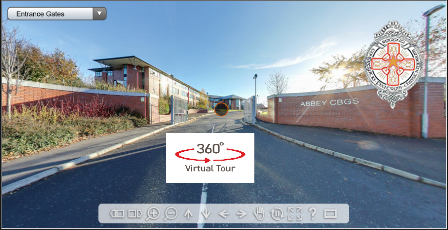
Abbey Christian Brothers Grammar School
Ballyholland Primary School
Bunscoil an Iúir
Cloughoge Primary School
Killean Primary School
Mullaglass Primary School
Newry High School
Our Lady's Grammar School
Sacred Heart Grammar School
St Clare's Convent Primary School
St Colman's Abbey Primary School
St Colman's College
St. John's Primary School
St Joseph's Boys' High School
St Joseph's Convent Primary School
St Mary's High School
St Patrick's Primary School
St. Paul's High School, Bessbrook
St Ronan's Primary School
Southern Regional College
Windsor Hill Primary School
Newry and Kilkeel Institute
St Malachy's Primary School

Churches
Newry Cathedral - Roman Catholic Cathedral and parish church
St. Mary's; St Patrick’s - Church of Ireland
Newry has two evangelical Presbyterian Churches: 1st Newry (known as Sandys Street), whose minister is Rev. Dr. Michael Barry, and Downshire Road, whose minister is currently Rev. Brian Colvin. It also has one Non-Suscribing Presbyterian Church, whose minister is Rev. Norman Hutton

Townlands
Newry is within the civil parish of Newry, which is partly in County Armagh and partly in County Down. Like the rest of Ireland, this parish has long been divided into townlands, whose names mostly come from the Irish language. The following is a list of townlands in Newry's urban area, alongside their likely etymologies.

County Armagh (west of the River Clanrye):

Altnaveigh (from Irish: Alt na bhFiach, meaning "raven’s glen")
Ballinlare (from Baile an Láir meaning “middle settlement”)
Carnagat (from Carn na gCat meaning “cairn of the cats”)
Carnbane (from Carn Bán meaning “white cairn”)
Derry Beg (from Doire meaning “oak grove” and Beag meaning “small”)
Drumalane (from Druim Leathan meaning “broad ridge”)
Lisdrumgullion (from Lios Druim gCuillinn meaning “ringfort of the holly ridge”)
Lisdrumliska (from Lios Druim Loiscthe meaning “ringfort of the scorched ridge”)
County Down (east of the River Clanrye):

Ballynacraig (from Baile na gCreag meaning “settlement of the crags”)
Carneyhough (from Carn Uí hEoch meaning “Ó hEoch’s cairn”)
Cloghanramer (from Clochán Ramhar meaning “thick stepping-stones”)
Commons (an English name that first appeared in 1810)
Creeve (from Craobh meaning “tree/bush”)
Greenan (from Grianán meaning “sunny spot” or “eminent place”)
Damolly (from Damh Maoile meaning “house of the round hill”)
Drumcashellone (from Druim Caisil Eoin meaning “ridge of Eoin’s stone fort”)


Current Abbey Time

Developed By iPixel Creative

Newsflash

Abbey Christian Brothers' School is currently open and operating as normal.

Abbey Gallery

report061203abbdunA1 zz New may (5) 0502ericegames1m 11 Nannery 2010 131103 Abbey Ennisk i 2011 2012 (8) P4030190 MACRORY 4 FINAL 070212 (44) 100_0051